If you own an older home in Buffalo, there is a good chance your heat comes from a boiler. Walk through the neighborhoods of North Buffalo, Parkside, Allentown, South Buffalo or the older streets of Kenmore and Tonawanda and you will find radiators and baseboard heat in house after house, many of them fed by a boiler that has been quietly working for decades. When it stops, you notice fast, because a Buffalo January does not give you much grace. This guide covers boiler repair in Buffalo, NY: what usually goes wrong, what you can safely check, when to repair versus replace, and how to hire someone good.
Quick answer: Most boiler repair calls in Buffalo come down to a handful of causes: no heat or hot water from a failed ignition, pump, thermostat or low-water cutoff, banging or gurgling from trapped air or sediment, leaks from valves or the boiler itself, and pressure problems from a faulty expansion tank or relief valve. Small parts are usually worth repairing. A leaking heat exchanger or boiler body, or a unit past roughly 25 to 30 years old with repeated failures, usually points to replacement. Always shut off the boiler and call a licensed pro if you smell gas or your CO alarm sounds.
If your boiler is down right now, you can request boiler repair help from a vetted local pro using the form on this page.
Hot Water vs Steam: Know What You Have
Before you can describe a problem to a technician, it helps to know which kind of boiler you own. The two common types in Western New York homes behave differently and fail in different ways.
- Hot-water (hydronic) boilers heat water and pump it through pipes to radiators or baseboard units. The system is closed and pressurized, usually somewhere around 12 to 15 psi when cold, and it relies on a circulator pump and expansion tank.
- Steam boilers heat water until it turns to steam, which rises through pipes to radiators and condenses back to water. You will see a sight glass showing the water level, and the system runs at very low pressure.
Look for a clear glass tube on the side of the boiler with a water line in it. If you have one, you probably have steam. If you see a pressure and temperature gauge instead, you likely have hot water. Many older Buffalo homes, especially pre-war houses in Elmwood Village, Allentown and the West Side, have steam or converted gravity hot-water systems, so it is worth confirming before a tech arrives.
Common Boiler Problems and What They Usually Mean
Boilers tend to tell you something is wrong well before they quit entirely. Here are the signs we see most often, and the typical culprits behind them.
No heat or no hot water
This is the big one. Causes range from the simple (thermostat set wrong, dead batteries, tripped switch, pilot light out) to the more involved (failed ignitor, bad circulator pump, stuck zone valve, faulty low-water cutoff, or a clogged flue). If the boiler is firing but radiators stay cold, the problem is often air in the lines or a failed pump. If it will not fire at all, think ignition, gas supply or a safety lockout.
Banging, knocking or gurgling
Kettling, which sounds like a rumbling tea kettle, usually points to mineral buildup on the heat exchanger. Banging in steam systems often means radiators are not pitched correctly or water is pooling in the pipes (water hammer). Gurgling in hot-water systems is typically trapped air that needs bleeding. These are worth addressing early, because ignoring them wears out the system.
Leaks and drips
A small drip at a valve, pump flange or radiator connection is often a cheap fix. Water pooling at the base of the boiler is more serious and can mean a failing heat exchanger or corroded body. Do not wait on a leaking boiler, since slow leaks cause rust and water damage over time. If it turns into real flooding, see our guides on what counts as a plumbing emergency and water damage restoration.
Pressure problems
On a hot-water boiler, pressure that is too low means the system may have a leak or needs refilling. Pressure that climbs too high and makes the relief valve discharge often points to a waterlogged or failed expansion tank. Constantly adding water to the system is a red flag, because it can mean a hidden leak and it introduces fresh oxygen that speeds corrosion.
Strange smells, soot or short cycling
Rotten-egg smell means gas, so leave and call the gas utility. Soot, yellow flames or a boiler that turns on and off every few minutes can mean poor combustion, a dirty burner or an oversized unit. These can also tie into carbon monoxide risk, covered below.
The table below is a quick reference for what you are likely to be dealing with.
| Symptom | Common cause | Typical fix level |
|---|---|---|
| No heat, boiler will not fire | Ignitor, thermostat, safety lockout, gas supply | Usually a repair |
| Boiler runs, radiators cold | Trapped air, failed pump, zone valve | Usually a repair |
| Kettling or rumbling | Sediment or scale on heat exchanger | Flush or repair; serious if long-term |
| Banging in steam system | Water hammer, radiator pitch, low-water issues | Repair and adjustment |
| Pooling water at boiler base | Corroded body or failing heat exchanger | Often points to replacement |
| Relief valve dripping | High pressure, bad expansion tank | Usually a repair |

What You Can Safely Check Before You Call
A few simple checks can save you a service call, or at least give your technician useful information. Stick to the basics and never open the burner compartment or work on gas lines yourself.
- Confirm the thermostat is set to heat and is calling for warmth. Replace its batteries if it has them.
- Check that the boiler’s power switch is on and the breaker has not tripped.
- Look at the pressure gauge on a hot-water system or the water level in the sight glass on a steam system.
- For oil boilers, confirm there is fuel in the tank, and press the reset button once only, per the manufacturer’s instructions.
- Check for any error code or blinking light and write it down.
Local tip: Snap a photo of the boiler’s data plate and any error code before the tech arrives. Make, model and age help them bring the right parts, which matters when a snowstorm has half the county calling for heat at once.
A boiler rarely fails without warning, so noises, drips and pressure swings are your cue to call early.
Boiler Repair vs Replacement: How to Decide
This is the question every homeowner eventually faces, and the answer depends on age, the nature of the failure and your repair history. Well-maintained cast-iron boilers can last 30 years or more, while many newer high-efficiency units have shorter lifespans, often around 15 to 20 years, depending on the model and water quality.
Repair usually makes sense when
- The failure is a replaceable part such as a pump, ignitor, thermostat, zone valve, relief valve or expansion tank.
- The boiler is under roughly 15 years old and has been serviced regularly.
- This is the first or second repair in a few years.
Replacement usually makes sense when
- The heat exchanger or boiler body is cracked, leaking or badly corroded.
- The boiler is 25 to 30 years old and breaking down repeatedly.
- Parts are obsolete or hard to find.
- Fuel bills keep climbing and the unit is an older, low-efficiency model.
- A technician finds unsafe combustion or carbon monoxide that cannot be corrected.
A rough rule many pros use: if a repair costs more than about half the price of a new boiler, or you are repairing the same system every year, replacement deserves serious thought. Prices vary a lot by boiler type, size, fuel and the condition of your pipes and radiators, so treat any figure as a ballpark and get written quotes. For more on the replacement side, see our planned guide to boiler replacement in older Buffalo homes, and if you are weighing a bigger switch, read about whether cold-climate heat pumps work in Buffalo and the cost of furnace replacement if you are considering ducted heat.
Running costs matter too. Your fuel type and the boiler’s efficiency drive your winter bills, which we break down in our guide to what it costs to heat a home in Buffalo and in the broader Buffalo cost of living overview.
Annual Boiler Service: The Cheapest Insurance You Can Buy
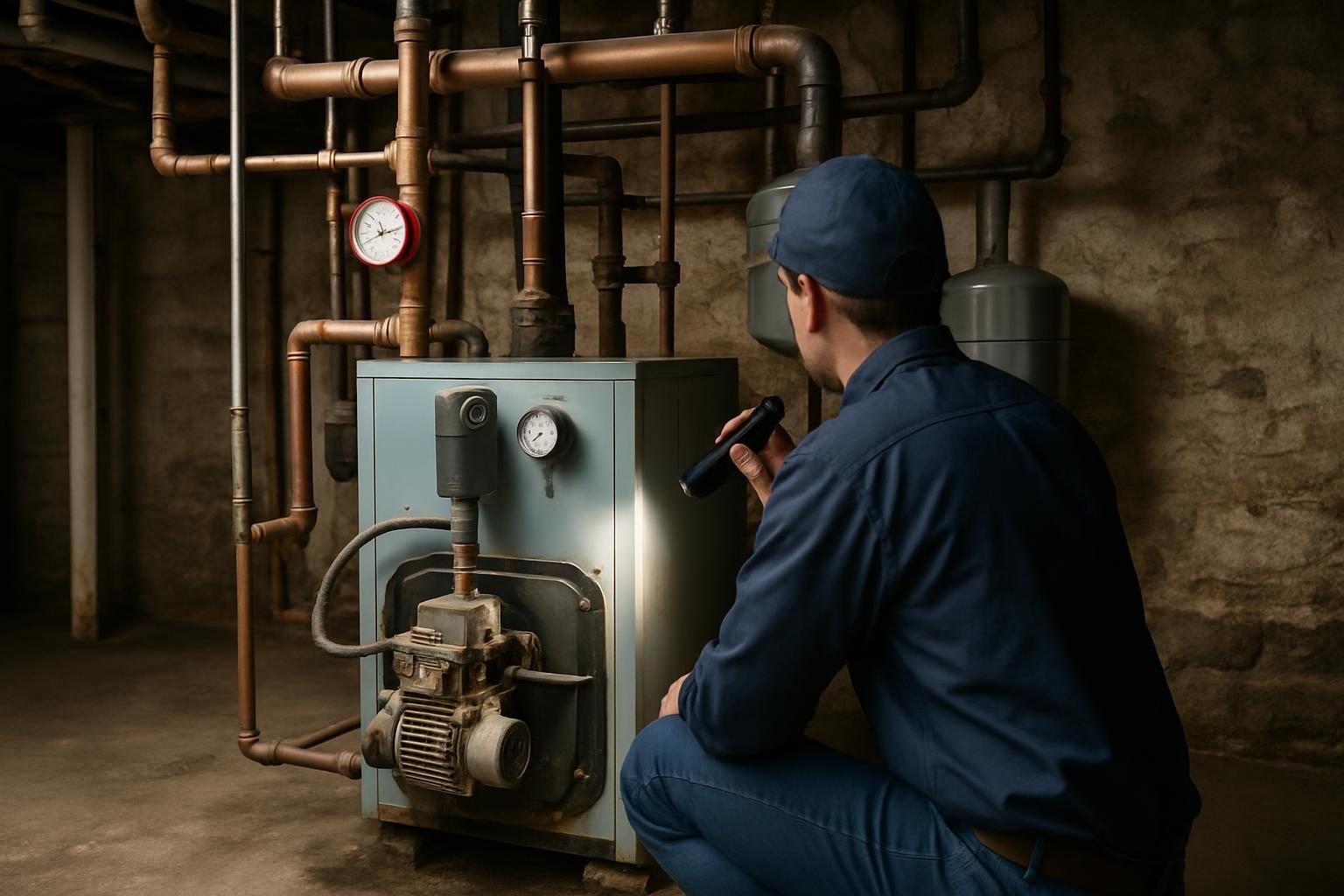
Boilers that get a yearly tune-up last longer, run more efficiently and fail less often. The best time to schedule it is late summer or early fall, well before the first lake-effect storm sends everyone to the phone at once.
A good annual service typically includes:
- Inspecting and cleaning the burner and heat exchanger
- Testing safety controls, including the low-water cutoff and relief valve
- Checking combustion and flue gases for safe operation
- Inspecting the expansion tank, circulator pump and zone valves
- Checking system pressure and water level, and flushing or skimming where needed
- Looking over venting, chimney connections and nearby carbon monoxide alarms
It fits neatly into a seasonal routine. Our Buffalo home maintenance checklist puts heating service right alongside gutter and roof prep. If you also have a furnace, a furnace tune-up can be booked in the same visit window.
Book your boiler service in September, not December, and you will skip the emergency rates and the wait.
Carbon Monoxide Safety Around Your Boiler
Any fuel-burning appliance can produce carbon monoxide (CO) if it is not burning or venting properly. CO is odorless and colorless, which is why a working detector matters so much. Cracked heat exchangers, blocked flues and poor combustion air are common causes in older systems.
- Install CO alarms on every level of the house and near sleeping areas, and test them monthly.
- Replace alarms according to the manufacturer’s date, since sensors wear out.
- If an alarm sounds, get everyone outside into fresh air and call 911. Do not go back in to investigate.
- Keep flues, vents and chimneys clear, including after heavy snow or ice buildup. Our chimney repair and masonry guide explains how freeze-thaw damage can affect venting, and a chimney sweep can check for blockages.
- Have your boiler’s combustion tested at its annual service.
For more detail, see our planned guide on carbon monoxide and furnace safety in Buffalo winters. If you smell gas, leave the building and call the gas utility’s emergency line from outside.
How to Hire a Boiler Repair Tech in Buffalo
Boilers are specialized equipment, and not every HVAC or plumbing company is comfortable with steam or older cast-iron systems. A tech who mostly installs forced-air furnaces may not be the right call for a century-old steam system in the West Side or Black Rock. Here is how to vet someone before they open your boiler.
- Ask about boiler experience. Ask specifically whether they service your type: steam, hot-water, gas or oil, and your brand if you know it.
- Verify licensing and insurance. Check the licensing requirements that apply in your municipality and ask for proof of liability insurance. Plumbing and heating work is regulated locally, so confirm what applies where you live.
- Get the diagnosis in writing. A good pro explains what failed, why, and what the options are, including a repair and a replacement path.
- Compare quotes. For anything beyond a minor fix, get at least two estimates and make sure they list parts, labor and any warranty.
- Be wary of pressure tactics. A technician who insists you replace the boiler on the spot without showing you the failure deserves a second opinion.
- Ask about emergency availability and fees. Know whether after-hours service is offered and how it is priced before you need it.
Local tip: Ask neighbors on your street who they use, especially if you live in a block of similar older homes in Parkside, North Buffalo or Kenmore. Someone with the same boiler model has probably already found the tech who knows it.
Our guides on how to hire a plumber in Buffalo and the planned how to choose an HVAC company in Buffalo walk through the same vetting steps in more detail. If your boiler is failing, you can request a quote from a vetted local boiler pro using the form on this page.
Frequently Asked Questions
How much does boiler repair cost in Buffalo?
It varies widely. Minor fixes like a thermostat, relief valve or ignitor are typically a few hundred dollars, while pump or control replacements cost more, and major component failures can run into the thousands. Ask for a written estimate with parts and labor itemized, and treat any quoted range as a general guide rather than a promise.
How long does a boiler last?
Many cast-iron boilers last 25 to 30 years or longer with regular maintenance, while newer high-efficiency models commonly last around 15 to 20 years. Water quality, usage and service history all affect lifespan.
Why is my boiler making banging noises?
Banging or knocking is usually trapped air, water hammer in a steam system, or sediment buildup causing kettling. It is not always urgent, but it should be inspected, since ongoing stress can damage components.
Why does my boiler keep losing pressure?
Low pressure in a hot-water boiler often means a leak somewhere in the system, a failing relief valve or an expansion tank problem. If you have to keep adding water, call a pro, because a hidden leak can cause corrosion and water damage.
Is it safe to run a boiler that is leaking?
A small drip at a fitting is usually manageable until a tech arrives, but pooling water around the boiler is a reason to shut it down and call for service right away. If you smell gas or a CO alarm sounds, leave the home and call 911 or the gas utility from outside.
Ready to get your heat back on? Request boiler repair help from a vetted local pro using the form on this page.
Get free boiler repair quotes from Buffalo pros
A vetted local pro will reach out with a free, no-obligation quote.

