
If you picture a Buffalo apartment with a front porch, hardwood floors, a coffee shop around the corner and a tree-lined street, you are picturing Elmwood Village. Looking for Elmwood Village apartments means choosing a particular way of living: older buildings with real character, a neighborhood you can run most errands in on foot, and a few winter-and-parking realities that newcomers learn the hard way.
Quick answer: Most Elmwood Village apartments are units in older converted houses (upper and lower flats) or small walk-up buildings, with a handful of larger multi-unit buildings along and near the Elmwood Avenue corridor. Expect charm, walkability and strong demand, but also quirks: limited or shared parking, winter street-parking rules, older heating systems, and utilities that vary widely from lease to lease. Ask about heat, parking and snow removal before you sign.
Need a hand with the move itself? If you are lining up a lease, you can request help from a vetted local mover using the form on this page. Narrow staircases and tight driveways are common here, so it pays to plan ahead.
For the bigger picture of the neighborhood, start with our profile of living in Elmwood Village. This guide focuses on the rental side.
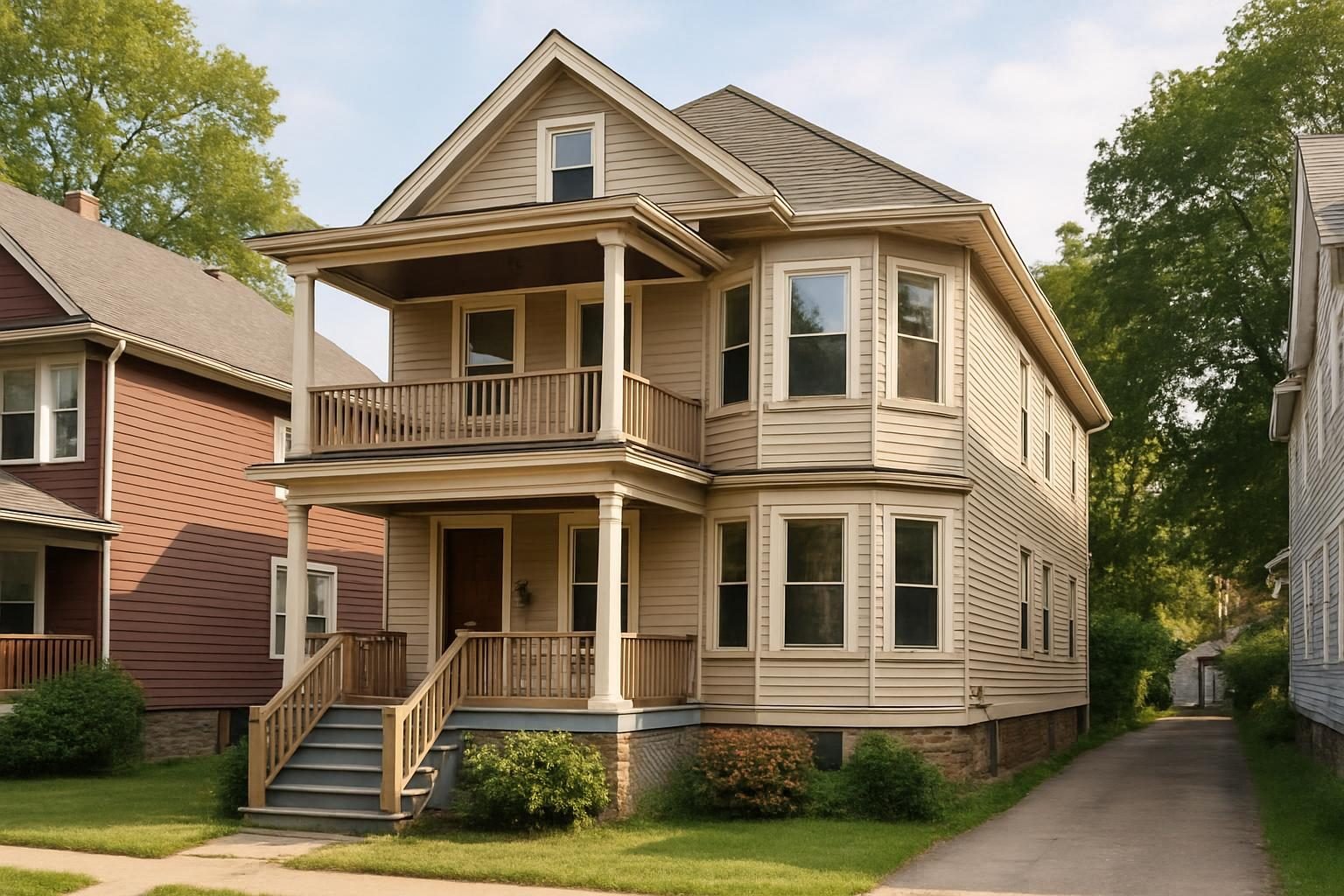
What Elmwood Village Apartments Actually Look Like
The defining feature of the rental stock here is the converted house. Many of the large, wood-framed homes built in the early 1900s were split into two or three units, so you will see “upper” and “lower” flats, sometimes with an attic or third-floor unit above. Think original woodwork, high ceilings, bay windows and the occasional built-in cabinet.
You will also find small brick walk-up buildings, converted carriage-house or side-street units, and some larger apartment buildings near the main commercial strip. Layouts are rarely cookie-cutter, which is part of the appeal and part of the challenge.
Upper flat vs. lower flat
| Feature | Upper flat | Lower flat |
|---|---|---|
| Natural light | Usually brighter, better tree-top views | Can be shadier, especially with big front-yard trees |
| Noise | You may hear footsteps if there is an attic unit above | You will hear the upstairs neighbors |
| Porch and yard access | Often a shared porch or private upper porch | More likely to have direct yard or driveway access |
| Winter warmth | Heat rises, so often warmer | Can run cooler, especially near the basement |
| Carrying groceries and furniture | Stairs, sometimes steep and narrow | Easier, with fewer or no interior stairs |
Neither is better in every case. The right unit depends on how much you value light and quiet against convenience and outdoor access.
The charm of an Elmwood flat is real, and so are the creaky stairs that come with it.
Walkability: Why People Pay Attention to This Neighborhood
Walkability is the headline reason people look at Elmwood Village apartments. The Elmwood Avenue corridor is lined with cafes, restaurants, independent shops, bakeries, bookstores and everyday services, so plenty of errands are possible without a car. Many residents walk to dinner, brunch or a coffee on a regular basis.
Nearby green space is a big draw too. Delaware Park and the Olmsted-designed parkland to the north are an easy walk or bike ride for much of the neighborhood, and in winter the park is a favorite for walking and, when conditions allow, skating. If you want to eat your way around the area, our guides to brunch in Buffalo by neighborhood and where locals eat are a good starting point.
A few honest caveats: a lot of weekend foot traffic means some blocks are lively into the evening, and being walkable does not mean everything is next door. Grocery runs, big-box shopping and some jobs may still call for a car or a bus ride. Closer to downtown, neighbors like Allentown offer a similar walkable feel with a different personality.

Parking and Winter Street Rules
Parking is the single most common surprise for new Elmwood renters. Many older houses were built before everyone owned a car, so off-street parking can be limited to a shared driveway, a tandem spot, a small rear pad, or nothing at all. Street parking is part of daily life, and it gets more complicated in winter.
Buffalo has seasonal and snow-related parking regulations, and the city can restrict overnight street parking during snow events or declared travel bans. Rules and enforcement change, so check the City of Buffalo’s current guidance rather than relying on what a neighbor tells you. Cars left in the wrong place during a plowing operation can be ticketed or towed.
- Ask whether a parking spot is included, and whether it is assigned or first-come.
- Ask how tandem driveway spots work if two units share one driveway.
- Ask who clears the driveway, walkway and steps after a lake-effect storm.
- Find out the nearest side-street options if you will be parking on the street.
- Check current city rules for winter and snow-event parking before you move in.
Local tip: Visit the street on a weekday evening and again on a weekend before you sign. Parking that looks easy at noon can be tight when neighbors are home and the restaurants are busy.
Heat, Utilities and Older-Building Quirks
Older buildings heat differently, and in Buffalo that matters. Some Elmwood Village apartments include heat in the rent, some do not, and some share a boiler or furnace with other units. How heat is delivered (radiators, forced air, individual units) and who pays for it can swing your monthly cost considerably in January.
Windows, insulation and drafts are part of the story too. A beautiful old flat can be expensive to keep warm if it is poorly sealed. For context on what winter does to household budgets, see our breakdown of the cost of living in Buffalo, and if you are curious how heating systems work in older homes, our guide to boiler problems and repairs explains what tenants and landlords are dealing with.
In a Buffalo winter, whether heat is included can matter more than a small difference in rent.
Questions to ask before you sign
- Is heat included, and if not, what is the heating fuel and how is it metered?
- Are utilities separately metered for my unit, or shared with neighbors?
- What are the typical winter utility bills for this unit? (Ask for past bills if the landlord will share them.)
- What type of heating system is it, and how old is it?
- Who is responsible for snow removal and for salting steps and walkways?
- Is there laundry on site, or do I need to go elsewhere?
- What is the policy on pets, and is there an extra deposit or fee?
- How are maintenance requests handled, and who do I call after hours?
- Is there storage space in the basement or attic?
- What is the lease length, and what are the renewal and rent-increase terms?
If a landlord is evasive about heat, parking or maintenance, take that as information. A good one will answer plainly and let you see the space in person.
Who Tends to Rent in Elmwood Village
The neighborhood attracts a mix: grad students and young professionals, people who work downtown or at nearby medical and university campuses, couples who want walkability, and longtime renters who simply love the area. Competition for well-kept units can be real, especially around the start of the academic year, so it helps to have your paperwork ready.
If you are comparing options, nearby areas offer different tradeoffs. North Buffalo is quieter and more residential, and the West Side offers a diverse, lively alternative. For a broader look at rental options across the city, see our upcoming guide to apartments in Buffalo, NY. If you are early in the process, our overview of what daily life in Buffalo is really like helps frame the bigger decision.
Moving Into an Elmwood Apartment
Moving day in Elmwood Village is its own skill. Narrow porches, steep or winding interior staircases, shared driveways and limited curb space can all complicate a truck, and a second-floor or attic unit changes the math on time and labor. Tell any mover up front about stairs, parking and whether you need a reserved spot for the truck.
Timing matters as well. Late summer is busy because of student move-ins, and winter moves mean planning around snow and ice. If you are between leases or downsizing into a smaller flat, storage units and moving storage can bridge the gap, and a junk removal or bulk pickup plan helps with whatever will not fit upstairs.
Ready to book? You can request a quote from a vetted local mover using the form on this page and mention stairs and parking so the estimate is realistic.
Frequently Asked Questions
Are Elmwood Village apartments mostly in old houses?
A large share of them are. Converted single-family homes split into upper and lower flats are a signature of the neighborhood, alongside small walk-ups and some larger buildings near the main commercial corridor.
Is heat usually included in rent?
It varies by building and lease. Some landlords include heat, others do not, and shared systems are common in older buildings. Always confirm what is included and ask about typical winter costs.
Do I need a car if I live in Elmwood Village?
Many residents get by with walking, biking and transit for daily needs, but a car is still handy for bigger grocery trips, suburbs and Bills or Sabres game days. If you have one, parking should be a top question.
What are the winter street parking rules?
Buffalo can restrict street parking during snow events and plowing, and rules can change. Check the City of Buffalo’s current guidance and confirm with your landlord where to park during storms.
When is the best time to look for an apartment?
Demand tends to rise in late spring and summer, particularly ahead of the academic year. Starting your search a few weeks to a couple of months before your target move date gives you the best selection.
Planning a move into the neighborhood? Request help from a vetted local mover using the form on this page and get ahead of stairs, parking and snow.
Get free moving quotes from Buffalo pros
A vetted local mover will reach out with a free, no-obligation quote.

