If you’ve just bought a house in Buffalo, one of your first questions is probably how much snow removal cost will run you each winter. The honest answer is that it depends on how you buy the service, how big your property is, and what kind of winter we get. A mild year and a November lake-effect blast can be wildly different seasons for the same driveway.
Quick answer: Buffalo homeowners usually choose between a flat seasonal contract (predictable, but you pay even in a light winter) and per-push or per-inch pricing (you pay only for storms, but bills swing with the weather). Typical residential driveway plowing is often priced in the tens of dollars per visit or in the hundreds to low thousands for a season, depending on size, sidewalks, salting and location. Treat any range as an estimate and get written quotes that spell out trigger depth, service windows and insurance.
Below we break down the pricing models, what pushes a quote up or down, how to read a contract, and when doing it yourself actually makes sense. Ready to compare real numbers for your address? Request a quote from a vetted local snow removal pro using the form on this page.
How Snow Removal Is Priced in Buffalo
Most contractors in Western New York offer some mix of three models. Understanding the differences is the single biggest way to avoid a surprise bill in February.
| Pricing model | How it works | Best for | Watch out for |
|---|---|---|---|
| Seasonal contract | One flat fee for the winter, usually split into installments | Budget certainty, long driveways, anyone who can’t shovel | Paying full price in a light winter; vague “unlimited” language |
| Per-push (per-visit) | A set price each time the crew plows or clears | Short driveways, homeowners who might travel or cover some storms themselves | Heavy winters can cost more than a contract would have |
| Per-inch (tiered) | Price steps up with accumulation, such as 2-6 inches, 6-12 inches, and so on | Properties that see highly variable snowfall | Disputes over how depth was measured |
Some companies also offer hybrid deals, such as a seasonal base fee with a cap on visits, or a per-push rate with a minimum monthly charge. Ask which structure you’re actually being quoted before comparing prices side by side.
What Drives the Price Up or Down
Two neighbors on the same street can get very different quotes. These are the factors that move the number most.
- Driveway size and shape. A short single-car driveway in Kenmore or North Buffalo is a quick job. A long, curving drive in Clarence or East Aurora, or a wide double-wide in Orchard Park, takes far more time and fuel.
- Lake-effect frequency. South Towns and parts of the Southtowns snow belt can see more storms than the city, and contractors price in the number of expected visits.
- Salting and ice melt. Many quotes cover plowing only. Salting, sanding or treating walkways is usually an add-on, either per application or bundled into a seasonal rate.
- Sidewalks and walkways. Hand-shoveling or snow blowing a front walk, steps and a path to the side door adds labor time. City of Buffalo rules also require clear public sidewalks, so this isn’t optional if you own a corner or street-facing property.
- Corner lots. Corner properties in neighborhoods like Parkside, South Buffalo and Hertel have more sidewalk frontage and often get a plow-berm dumped at the end of the drive. Expect that to reflect in the price.
- Access and obstacles. Tight turnarounds, parked cars, narrow alleys, low-clearance carports and landscaping edges slow a crew down.
- Snow stacking and hauling. Pushing snow to the side is standard. Hauling it away is a premium service, and it matters most on small lots in places like Allentown or the Elmwood Village where there’s nowhere to pile it.
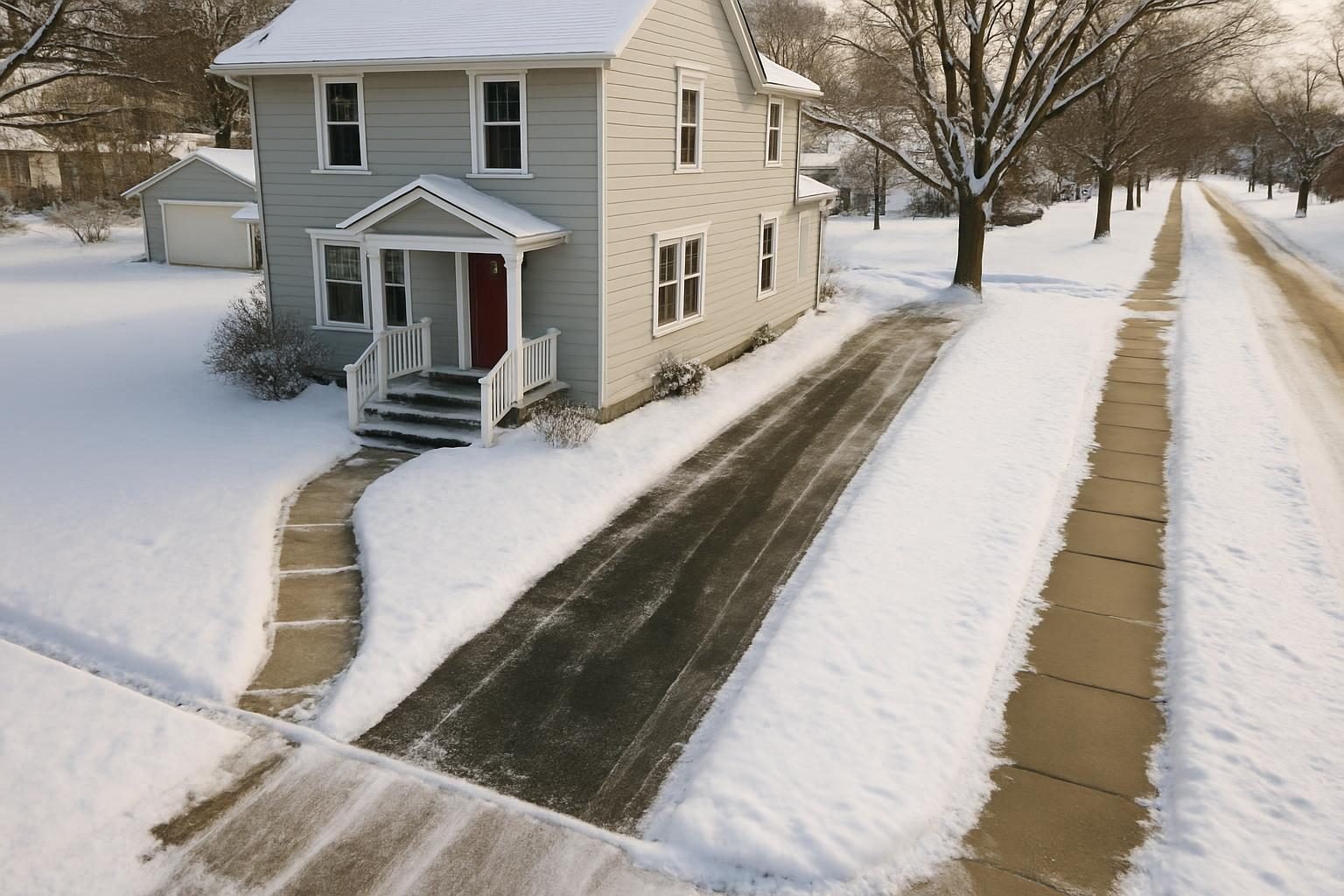
The same driveway can cost very different amounts depending on corner exposure, salting and how many storms the season delivers.
Seasonal Contract vs Per-Push: Which Costs Less?
Neither model is always cheaper. It comes down to how much risk you want to carry. A seasonal contract shifts the weather risk to the contractor, and in return you pay a premium for predictability. Per-push pricing shifts that risk to you.
When a seasonal contract tends to win
- You have a long or complicated driveway where every visit is a bigger job.
- You live in a heavy lake-effect area and expect many visits.
- You can’t or won’t shovel (health, work schedule, travel).
- You want one predictable line item in your winter budget, which also helps when you’re planning around the cost of living in Buffalo.
When per-push or per-inch tends to win
- You have a short, simple driveway.
- You’re comfortable handling light dustings yourself and only want a plow for the big storms.
- You’re away for part of the winter.
- You’d rather not pre-pay for a season that turns out mild.
A quick way to compare: ask for both quotes, then estimate how many plowable storms you realistically expect. If the per-push price times that number lands close to the seasonal price, the contract usually buys you peace of mind for little extra. For more on plowing specifically, see our upcoming guide on snow plowing costs in Buffalo.
Local tip: Ask any contractor how they define a “storm.” Buffalo often gets several back-to-back days of lake-effect snow from a single system, and some crews bill each day’s return visit separately while others count it as one event.
How to Read a Snow Removal Contract
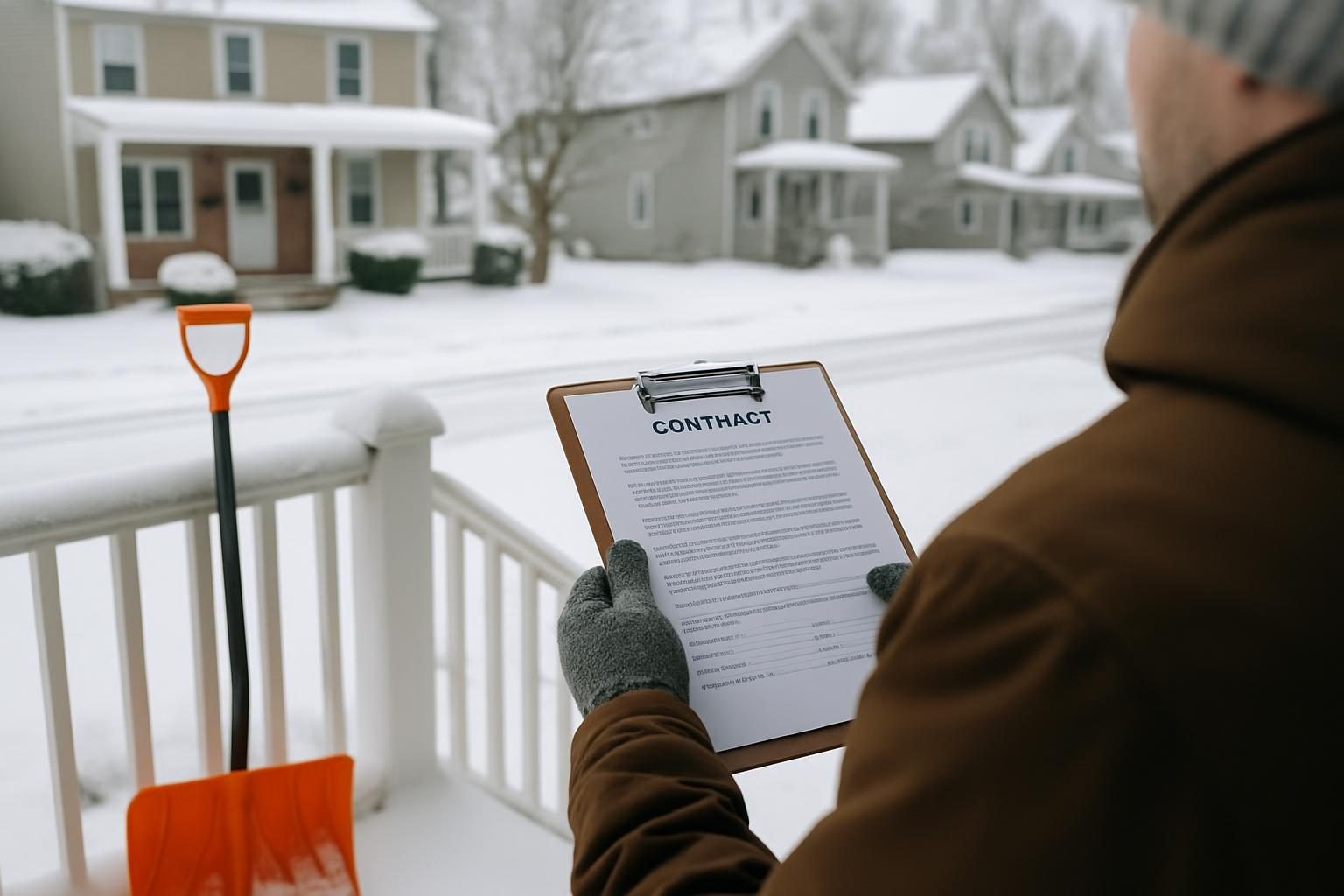
The price is only half the story. The fine print decides whether you actually get service when you need it. Before you sign, look for these items in writing.
- Trigger depth. The snowfall amount that starts service, commonly something like two or three inches. A lower trigger means more visits and, on a per-push plan, a higher bill.
- Service windows. Does the crew promise to be done by a certain time? Look for specifics such as “cleared by 7 a.m. for storms ending overnight” rather than “as soon as possible.”
- Visit limits and exclusions. “Unlimited” should actually mean unlimited. Check for caps, blackout conditions or extra charges during extreme storms.
- What’s included. Plowing, walkways, steps, salting, edging along the garage, clearing around mailboxes and the end-of-driveway berm.
- Liability and property damage. Who pays if a plow clips a mailbox, lawn edge, paver or light post? Mark delicate spots before the first storm and get the damage policy in writing.
- Insurance. Ask for proof of general liability coverage, and workers’ compensation if the company has employees. Certificates should be current.
- Payment and cancellation terms. Installment schedules, late fees, and what happens if you cancel mid-season.
- Slip-and-fall language. Some contracts push responsibility for icy walkways back onto the homeowner. Know what you’re agreeing to.
A cheap quote with no trigger depth, no service window and no proof of insurance isn’t really a quote at all.
DIY Snow Removal vs Hiring a Pro
Plenty of Buffalonians handle their own snow, and for a lot of properties that’s a perfectly good call. The tradeoff is time, effort, equipment and risk rather than a simple dollars-versus-dollars comparison.
What DIY really costs
Shoveling is cheap up front but physically demanding, and heavy wet lake-effect snow is a known strain on backs and hearts. A snow blower is a bigger investment, and it comes with fuel or electricity, maintenance, shear pins and storage. We’re covering that side in an upcoming snow blower guide, so watch for it.
What hiring really buys
You’re paying for speed, reliability on workday mornings, equipment you don’t have to store, and a transfer of the physical work and some of the liability. The trade is less control over timing and a recurring bill.
- DIY makes sense for small lots, short drives, healthy owners with flexible schedules, and neighborhoods with mostly modest snowfall.
- Hiring makes sense for long driveways, steep grades, owners who travel, anyone with health limits, and rental or investment properties where you need reliable coverage.
- A hybrid works well too: hire a plow for the driveway and handle the front walk yourself, or the reverse.
Don’t forget the roof. Heavy accumulation is a separate issue from driveway clearing, and our guide to roof raking and snow load in Buffalo explains when to worry.
Local tip: Book your contractor in early fall, not after the first big storm. Reliable crews often fill their routes before Thanksgiving, and late sign-ups tend to get worse timing or pricier terms.
Getting Accurate Quotes
The best way to compare prices is to give every contractor the same information and ask for the same breakdown. That makes the numbers actually comparable.
- Measure or estimate your driveway length and width, and note any turnarounds or steep sections.
- List every area you want cleared: driveway, walks, steps, patio, mailbox, public sidewalk.
- Decide whether you want salting or ice treatment and how often.
- Ask for both a seasonal and a per-visit price.
- Request the trigger depth, service window and insurance certificate in writing.
- Compare three quotes, but weigh reliability and communication alongside price.
For a deeper look at vetting contractors, read our guide to hiring the right snow removal and plowing service in Buffalo. It pairs well with our local’s guide to lake-effect snow, which explains why your location in the region matters, and the seasonal home maintenance checklist for what else to schedule before winter hits.
Want pricing for your own property? Use the form on this page to request help from a vetted local snow removal pro.
Frequently Asked Questions
Is a seasonal snow removal contract worth it in Buffalo?
For many homeowners, yes, especially with long driveways or in heavier snow areas, because it caps your spending and secures a spot on the crew’s route. If you have a short driveway and can handle small storms yourself, per-push pricing can come out cheaper.
What is a typical trigger depth for plowing?
Many residential contracts start service at around two to three inches of accumulation, though it varies by company. Always confirm the exact number in writing, since it directly affects how often you’re plowed and billed.
Does snow removal cost include salting?
Often it doesn’t. Salting, sanding and walkway treatment are frequently priced separately, either per application or bundled into a seasonal rate. Ask exactly what’s included before you compare quotes.
Do I have to clear my sidewalk in Buffalo?
City and many suburban ordinances require property owners to clear public sidewalks within a set time after snowfall. Rules and deadlines differ by municipality, so check your city, town or village for current requirements, and confirm your contractor includes sidewalks if you need them.
What insurance should a snow removal contractor carry?
At minimum, general liability coverage, plus workers’ compensation if they have employees. Ask for a current certificate of insurance and keep a copy with your contract.
Get free snow removal quotes from Buffalo pros
A vetted local pro will reach out with a free, no-obligation quote for your property.

