
Every Buffalo homeowner knows the feeling. The forecast turns, the lake-effect band parks itself over your street, and you suddenly remember you never cleaned the gutters, never called about the furnace, and have no idea where the main water shutoff is. By then, every roofer, heating tech and plow operator in Western New York is booked solid.
The homeowners who stay calm during a Buffalo winter aren’t luckier. They did a handful of unglamorous things in the fall, in the right order. This guide puts those things on one page, September through December.
Quick answer
Start in September with the roof and gutters, because ice dams and water damage begin there. Book your furnace or boiler service in October, before the first cold snap fills every technician’s calendar. Use November to lock in your snow removal plan and your power-outage plan, and use December to stock the emergency kit and do a final walkthrough. The jobs that cost the most when they go wrong are the ones nobody sees until January: the attic, the pipes on the north wall, and the sump pump.
What’s inside the full guide
- A month-by-month September to December checklist you can print and stick on the fridge
- How to spot ice dam trouble before it reaches your ceiling
- A furnace and boiler prep routine, plus what a tune-up should actually include
- Frozen pipe prevention for older Buffalo homes, including the trouble spots most people miss
- A "call a pro vs DIY" table so you know where your own time is well spent
- Typical cost ranges (clearly labelled as estimates) for every major winter job
- Snow removal compared: DIY, per-visit contractor, or seasonal plow contract
- Red flags that mean get help now, not after the storm
The full checklist unlocks below. It’s free, and it takes less than a minute.
Unlock the Full Buffalo Winter-Ready Checklist
Get the month-by-month checklists, pro-vs-DIY table, cost estimates and red flags sent free to your inbox.
Before you start: how to use this guide
Buffalo winters are not just cold. They are wet, windy, and long, and they swing between freezing and thawing often enough to punish every weak spot in a house. A lot of our housing is older, with plaster walls, original windows, uninsulated corners and plumbing that runs through exterior walls. That makes preparation worth more here than in a lot of other places.
Work through the months in order. Each section has a checklist you can print or copy. Cost ranges throughout are typical estimates only. Prices vary by contractor, house size, access and season, so always get current written quotes and verify licensing and insurance before hiring anyone.
September: Roof, gutters and the outside of the house
September is the best month for exterior work. The weather is dry, ladders are safe, and contractors still have openings.
Roof and ice dams
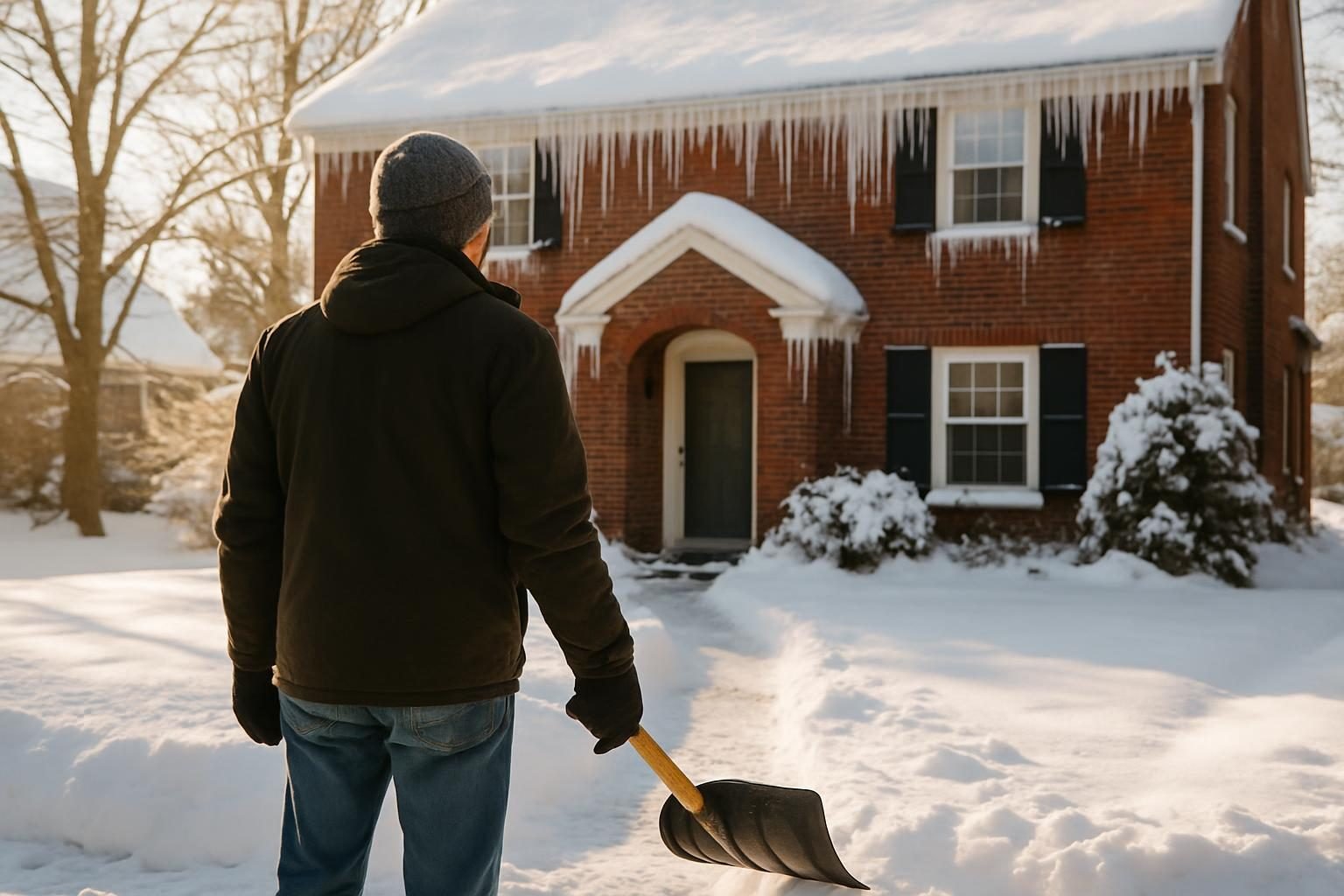
An ice dam forms when heat escaping from your living space warms the roof, snow melts, and the meltwater refreezes at the cold eave. The ice ridge then traps water behind it, and that water can creep under shingles and into your ceiling. The roof is where you see the problem, but the cause is usually in the attic, so we cover insulation in October.
- From the ground, look for missing, curled, cracked or lifted shingles.
- Check flashing around chimneys, vents and skylights for gaps or rust.
- Look for sagging, dark streaks or daylight in the attic ceiling boards.
- Trim branches that hang over the roof or rub against it.
- Check that soffit vents are not blocked by insulation or debris.
- Book a professional inspection if the roof is old, or if you’ve seen stains on upstairs ceilings.
Estimate: a roof inspection typically runs about $150 to $400. Minor repairs such as replacing shingles or resealing flashing often fall between $300 and $1,500. A full replacement is a very different budget, so get several quotes.
Gutters and downspouts
Clogged gutters hold water, which freezes, adds weight and pulls gutters away from the fascia. Wait until most of the leaves have dropped, but don’t wait until November when the weather turns. In a leafy neighborhood, you may want to clean twice.
- Clear leaves and debris from every run, and flush with a hose.
- Confirm that water actually flows to the downspouts.
- Check that downspouts discharge at least several feet away from the foundation.
- Re-fasten loose hangers and seal visible seams.
- Look for sagging sections that will hold standing water.
Estimate: professional gutter cleaning for an average single-family home is often about $100 to $300. Gutter guards installed professionally commonly range from about $1,000 to $3,500 or more, depending on the product and length of run. Guards reduce clogging but rarely eliminate maintenance, so ask what the installer expects you to do.
Other September exterior tasks
- Disconnect and drain garden hoses, and shut off and drain exterior spigots.
- Check caulk and weatherstripping around windows and doors.
- Inspect porch steps, railings and walkways for hazards that will be hidden under snow.
- Mark the edges of your driveway and any landscaping a plow could damage (do this in November, but plan now).
If your roof or gutters need more than you can safely handle from a ladder, request help from a vetted local pro using the form below, and do it early, while schedules are still open.
October: Heat, air, water and the attic
October is when the inside of the house gets its attention. It is also when heating technicians start getting slammed, so book early.
Furnace or boiler tune-up
Many Buffalo homes run on natural gas forced-air furnaces, and many older homes have boilers with radiators. Either way, an annual service call is cheap insurance against a no-heat emergency on the coldest night of the year.
- Schedule a professional tune-up before the first sustained cold.
- Replace the furnace filter, and set a reminder to check it monthly in winter.
- For boilers, ask the technician to check pressure, the expansion tank, and bleed radiators as needed.
- Test every carbon monoxide detector and smoke detector, and replace batteries and any expired units.
- Keep supply vents, return vents and radiators clear of furniture and boxes.
- Check the exhaust and intake pipes outside, and keep them clear of snow all winter.
- Know where your thermostat’s emergency or backup settings are.
Estimate: a furnace tune-up is typically about $80 to $200, and a boiler service often $100 to $300. Repairs are extra, and some companies offer yearly maintenance plans. Compare what is actually included before you sign.
Attic insulation and drafts
This is the most overlooked job on the list, and it is the one that links directly to ice dams and high heating bills. Warm air leaking into the attic is the root problem.
- Look at the attic floor. If you can see the tops of the joists, there is probably not much insulation.
- Check around recessed lights, attic hatches, chimney chases and plumbing stacks for gaps where warm air escapes.
- Seal small gaps with appropriate caulk or foam, and weatherstrip the attic hatch.
- Make sure insulation does not block the soffit vents at the eaves.
- On a windy day, feel around window frames, outlets on exterior walls, and the rim joist in the basement for drafts.
- Add door sweeps and fresh weatherstripping where you feel air moving.
Air sealing usually comes before adding insulation, and it is often the better value. Ask a contractor about an energy assessment, and check whether any utility or state programs are currently available. Verify the details directly, as programs change.
Estimate: DIY air sealing supplies might be $50 to $200. Professionally blown-in attic insulation often runs roughly $1,500 to $4,500, depending on the attic size and the work needed.
Frozen pipe prevention
Pipes freeze most often in exterior walls, unheated basements and crawl spaces, garages, and under kitchen and bathroom sinks on outside walls. Older Buffalo homes, and especially rear additions and porches that were enclosed later, tend to have a few of these trouble spots.
- Find and test your main water shutoff valve now, and make sure everyone in the house knows where it is.
- Insulate exposed pipes in basements, crawl spaces and garages with foam sleeves.
- Seal gaps where pipes enter the house, as cold air coming through these holes is a common cause of freezing.
- Shut off and drain outdoor spigots, and install insulated covers if you do not have frost-free spigots.
- Know which pipes have frozen before, because they tend to do it again.
- Plan to open cabinet doors on exterior walls and let a faucet drip during hard freezes.
- Keep the heat on, even if you travel. Set it no lower than a safe temperature, and ask someone to check on the house.
Estimate: foam pipe insulation is inexpensive, often a few dollars per section. Professional pipe rerouting or insulation work can range from a couple hundred dollars to well over a thousand if walls must be opened.
Sump pump
Wet basements are not only a spring problem. A winter thaw with heavy rain on frozen ground sends water straight toward foundations, and a failed pump at that moment is costly.
- Pour a bucket of water into the pit and confirm the pump kicks on, drains it, and shuts off.
- Check that the float moves freely.
- Clear the pit of silt and debris.
- Check the discharge line outside. Make sure it is not blocked, disconnected, or likely to freeze at the outlet, and that water flows away from the house.
- Test any battery backup, and replace the battery if it is old.
- Consider a water alarm near the pit.
Estimate: a replacement sump pump installed by a plumber is often about $500 to $1,200. A battery backup system may add roughly $400 to $1,000 or more.
November: Outages, snow and the car
By November, the first flurries are close. This is the month for planning how you will cope when something goes wrong.
Generator and power-outage plan
Heavy wet snow, ice and wind can bring down limbs and lines. Decide now how you will handle a multi-day outage, because that decision is much harder during one.
- Decide whether you need a generator at all, or whether a plan to stay with family or friends is enough.
- If you own a portable generator, test it, change the oil as needed, and store fresh fuel safely and legally.
- Never run a generator indoors, in a garage, or near a window or door. Carbon monoxide kills quickly.
- Do not backfeed your house through an outlet. A licensed electrician should install a transfer switch or interlock.
- If you rely on electric medical equipment, talk to your provider and utility about a plan well before winter.
- Charge power banks, and keep flashlights, headlamps and spare batteries in an obvious place.
- Know how to open your garage door manually.
- Save your utility’s outage reporting method in your phone. Verify it, and do not rely on memory.
A standby generator (the permanent kind that starts automatically) is a bigger investment. It needs correct sizing, permits, gas line work and a proper pad, so it is not a DIY job.
Estimate: portable generators commonly range from about $500 to $2,000 or more. A transfer switch with installation might run about $500 to $1,500. A professionally installed standby generator is often in the range of $7,000 to $15,000 or higher, depending on size and site conditions.
Snow removal plan: DIY, contractor or seasonal contract
The worst time to choose a snow plan is after eighteen inches have landed. Compare your options honestly, including your health, your schedule, and how long your driveway is.
| Option | Typical cost (estimate) | Best for | Watch out for |
|---|---|---|---|
| DIY with shovel or snow blower | Shovel: low. Snow blower: roughly $500 to $2,000+ to buy | Short driveways, people who are fit and home most days | Heart strain from heavy wet snow, back injuries, and being away when it snows |
| Pay-per-visit contractor | Often about $30 to $75+ per visit for a standard driveway | Occasional help, or a backup when you cannot do it yourself | No guaranteed priority in big storms, and costs add up in a snowy winter |
| Seasonal plow contract | Often about $400 to $1,200+ for the season, depending on size and terms | Long driveways, travelers, older homeowners, and anyone who needs predictable service | Fine print on trigger depth, number of visits, salting, and where snow gets piled |
If you sign a seasonal contract, get it in writing and confirm these points:
- The snowfall depth that triggers a visit.
- Whether salt or ice melt is included.
- Where the contractor will pile snow, and what happens to your lawn edges, fences or mailbox.
- Proof of liability insurance.
- Whether they plow sidewalks and walkways, if your municipality requires you to clear them.
- What happens if they miss a storm.
Also check your city or town’s rules about sidewalk clearing and winter parking, and verify them at the source, since they change.
If you want a seasonal plow quote, use the form below to request help from a vetted local pro, ideally before the first storm.
Car and driveway
- Check the battery, wipers, washer fluid, coolant and tire condition before the cold arrives.
- Switch to winter tires if you use them, or at least check tread depth and pressure.
- Keep the gas tank at least half full all winter.
- Stock the car with a shovel, ice scraper, jumper cables, blanket, flashlight, gloves and a small bag of traction material.
- Seal or fill driveway cracks in the fall, because water that freezes in cracks makes them bigger.
- Stake driveway edges so a plow operator can see them.
- Stock ice melt, and use it sparingly near concrete, plants and pets.
- If you park on the street, learn the local winter parking rules so you do not get towed.
December: The emergency kit and final walkthrough
Emergency kit
Prepare for at least a few days at home without power or the ability to leave. Keep everything together in one bin or closet.
- Drinking water for each person and pet.
- Non-perishable food, a manual can opener, and any needed baby or pet food.
- Flashlights, headlamps, extra batteries, and a battery or hand-crank radio.
- Warm blankets, sleeping bags, hats and gloves.
- A first aid kit and a supply of essential medications.
- Fully charged power banks and charging cables.
- A battery-powered carbon monoxide detector.
- Cash in small bills.
- Copies of key contacts and your insurance information.
- Pet supplies, if you have animals.
Estimate: a basic kit can often be built for about $75 to $200, depending on what you already have.
Final walkthrough
- Test every smoke and carbon monoxide detector one last time.
- Walk the basement with a flashlight, checking for drips, damp spots and cold drafts.
- Check the attic for frost or water stains after the first cold snap.
- Confirm the furnace is cycling normally and the filter is clean.
- Confirm your plow or snow removal plan is in place.
- Put the bin, flashlights and shovels where you can reach them in the dark.
Call a pro vs DIY
You can save money by handling some of this yourself, but some jobs are simply not worth the risk. Use this table as a rough guide.
| Task | DIY? | Call a pro when… |
|---|---|---|
| Roof inspection | Ground-level look only | You see damaged shingles, flashing problems, or interior stains. Do not climb a steep or wet roof. |
| Gutter cleaning | Yes, if you are comfortable on a ladder | Your home is tall, the roof is steep, or gutters are sagging or pulling away |
| Furnace or boiler | Filter changes and vent clearing only | Annual tune-up, strange noises or smells, uneven heat, or any carbon monoxide alarm |
| Pipe insulation | Yes, for accessible pipes | Pipes are inside walls, have frozen before, or need rerouting |
| Attic air sealing and insulation | Small gaps and weatherstripping | You need large areas of insulation, or you suspect moisture or mold |
| Sump pump | Testing and cleaning the pit | The pump is old, noisy, failing the test, or you want a battery backup |
| Generator hookup | Never DIY wiring | You need a transfer switch, interlock or standby unit. Licensed electrician required. |
| Snow removal | Short driveways and walkways | Long or steep driveways, health limits, or frequent travel |
| Ice dam removal | Use a roof rake from the ground only | Ice is already on the roof or water is entering the house. Avoid chipping it with tools. |
Typical cost ranges at a glance
These are estimates to help you budget, not quotes. Verify current pricing with licensed, insured local contractors.
| Job | Estimated typical range |
|---|---|
| Roof inspection | $150 to $400 |
| Minor roof repair | $300 to $1,500 |
| Gutter cleaning | $100 to $300 |
| Gutter guards (installed) | $1,000 to $3,500+ |
| Furnace tune-up | $80 to $200 |
| Boiler service | $100 to $300 |
| Attic insulation (blown-in) | $1,500 to $4,500 |
| Sump pump replacement | $500 to $1,200 |
| Portable generator | $500 to $2,000+ |
| Standby generator (installed) | $7,000 to $15,000+ |
| Seasonal plow contract | $400 to $1,200+ |
| Emergency kit | $75 to $200 |
Red flags: get help now
Some problems should not wait for a convenient appointment. If you notice any of these, act immediately.
- A carbon monoxide alarm sounds. Get everyone outside into fresh air and call emergency services. Do not go back in to investigate.
- You smell gas. Leave the house, do not touch switches, and call your gas utility or emergency services from outside.
- Water is dripping through a ceiling or running down an interior wall during or after a storm.
- A pipe has burst, or a pipe is frozen and bulging. Shut off the main water valve and call a plumber.
- The sump pump runs constantly or does not run when the pit is full.
- Your roof or ceiling is sagging under heavy snow, or you hear creaking and cracking from the structure.
- The furnace or boiler stops in freezing weather, makes banging noises, or gives off a burning smell.
- Downed or sparking power lines. Stay far away and report them.
- Large ice dams with water entering the house.
Never use an open flame or a torch to thaw a frozen pipe. A hair dryer or warm towels are safer, and if you cannot reach the frozen section, call a plumber.
Frequently asked questions
When should I start preparing a Buffalo home for winter?
Start in September. Roof, gutter and exterior work are far easier in dry weather, and good contractors fill their schedules quickly once the first cold arrives.
How do I know if I have an ice dam problem?
Look for thick ridges of ice along the eaves, large icicles, and water stains on ceilings or upper walls after a thaw. Heat escaping into the attic is usually the underlying cause, so attic air sealing and insulation are the lasting fix.
Is a seasonal plow contract worth it?
It depends on your driveway, your health and your schedule. For long or steep driveways, or if you travel, the predictability is often worth it. Read the terms carefully, especially the trigger depth and what is included.
Can I run a generator in my garage if the door is open?
No. Carbon monoxide can still build up and drift into the house. Run it outdoors, well away from windows, doors and vents, following the manufacturer’s instructions.
Ready to get it done?
You do not have to tackle the whole list yourself. If you want a roof inspection, gutter cleaning, furnace service, pipe protection, a plow contract or a generator quote, request help from a vetted local pro using the form below. Print the checklists, start in September, and by the time the first lake-effect band rolls in, you will be the neighbor with nothing to worry about.
Get help from a vetted local winter home pro
Tell us what you need and we’ll connect you with a vetted Buffalo-area pro who can help before the snow flies.