
Nobody plans a water heater replacement. It usually happens on a January morning when the shower runs lukewarm and there’s a puddle by the basement furnace. In Buffalo, where incoming water can drop to the 40s in midwinter, the choice you make matters more than it would in a milder city. This guide covers how to spot a failing unit, how tank, tankless and heat pump models behave in our climate, how to size a replacement, and how to hire someone to do it right.
Quick answer: Most tank water heaters last roughly 8 to 12 years, so plan a water heater replacement as soon as you see rust, leaks, rumbling or repeated lukewarm showers. In Buffalo, a standard tank unit is usually the lowest upfront cost, a heat pump water heater is the most efficient (if your basement has the space and stays reasonably warm), and tankless works well but needs to be sized for our cold winter inlet water. Typical installed costs range from about $1,500 to $3,500 for tank units, $3,000 to $6,500 or more for tankless and $3,000 to $5,500 for heat pump models, before any rebates. Get at least two written quotes.
Need a hand now? You can request help with your water heater replacement from a vetted local pro using the form on this page.
Signs your water heater is failing
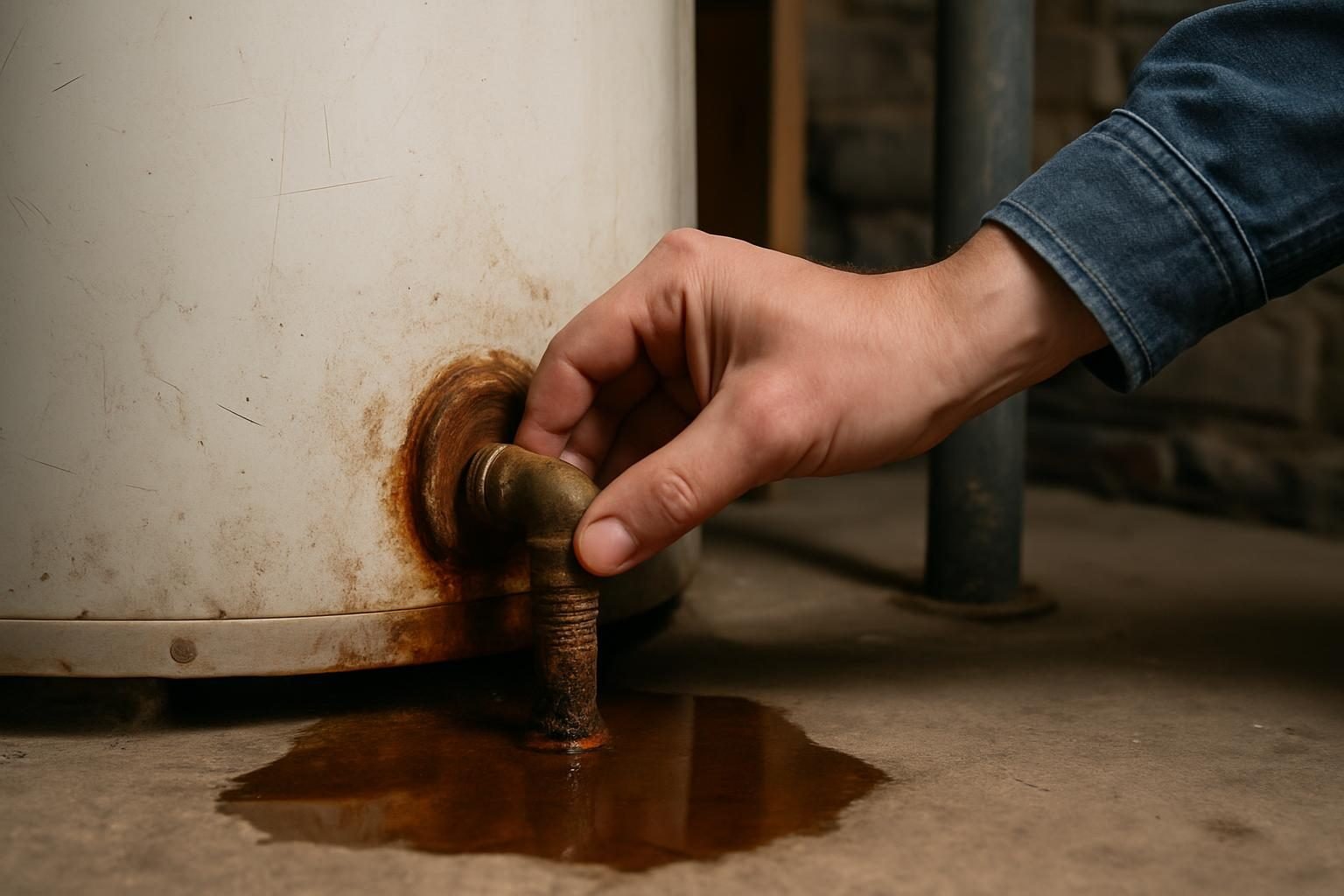
Water heaters rarely die without warning. If you catch the signs early, you can replace the unit on your schedule instead of mopping up a flooded basement. Watch for these:
- Age: Check the serial number sticker. Many manufacturers encode the manufacture date in it. A tank past 10 years is on borrowed time.
- Rust-colored hot water: This can mean the inside of the tank is corroding, not just your pipes.
- Rumbling or popping: Sediment builds up on the bottom of the tank and water trapped beneath it boils. Buffalo’s Lake Erie and Niagara River supply is generally considered moderately hard to hard in many areas, so sediment is a real factor.
- Moisture at the base: A small weep at a fitting may be fixable. Water pooling at the bottom of the tank usually means the tank itself has failed.
- Running out of hot water faster than before: A failing heating element or heavy sediment shrinks your usable capacity.
If you see active leaking, shut off the water supply to the heater and the power or gas to it, then call a pro. A flooded basement is its own headache, and our guide to why Buffalo basements flood covers what comes next if water gets away from you.
A water heater past ten years old is not an emergency yet, but it is a countdown.
Tank vs tankless vs heat pump: what works in Buffalo
All three types will heat your water. The difference is what they cost to buy, what they cost to run, and how they handle a cold climate. Here is a side-by-side comparison using typical ranges, which vary by installer, fuel type and the condition of your existing venting and piping.
| Type | Typical installed cost | Typical lifespan | Best for | Cold-climate watch-out |
|---|---|---|---|---|
| Standard tank (gas or electric) | About $1,500 to $3,500 | 8 to 12 years | Lowest upfront cost, simple swap | Standby heat loss; unit in an unheated space works harder |
| Tankless (gas or electric) | About $3,000 to $6,500+ | 15 to 20 years | Smaller households, limited floor space | Cold inlet water cuts flow rate; may need larger gas line or venting |
| Heat pump (hybrid) | About $3,000 to $5,500 | 10 to 15 years | Lowest operating cost, electric homes | Needs space, airflow and a basement that stays above roughly 40 to 50 degrees |
Standard tank water heaters
The conventional tank is still the most common replacement in Buffalo homes, from South Buffalo doubles to Kenmore bungalows. It is predictable, easy for any plumber to service, and usually fits right where the old one sat. The downside is standby loss: the unit keeps a full tank hot around the clock, which costs more when the basement is chilly.
Tankless water heaters
Tankless units heat water on demand, so there is no standby loss and no running out as long as you stay within the flow rating. The catch in Western New York is the incoming water temperature. A unit rated to deliver a certain flow with a 40 degree rise will deliver noticeably less when winter inlet water is in the 40s and you want 120 degree output. A tankless unit that works perfectly in Texas can disappoint here if it was not sized for our cold months.
Gas tankless units also often need a bigger gas line and different venting than your old tank, which can add real cost in older Elmwood Village and Allentown houses. Ask your installer to include any gas line and venting changes in the written quote.
Heat pump water heaters
A heat pump water heater pulls heat from the surrounding air instead of generating it directly, which makes it far more efficient than a standard electric tank. It also cools and dehumidifies the space around it, which can be a small bonus in a damp basement and a small penalty in a cold one. These units generally want a large open space and a room that stays above freezing with some margin, so a tight, unheated utility closet is a poor fit.
If you are already considering other electrification upgrades, our upcoming guide on how heat pumps perform in Buffalo winters covers the same principles for home heating.
Buffalo’s cold inlet water is the one variable that can quietly wreck a tankless setup that was sized for a warmer city.

How Buffalo winters affect your water heater
Incoming water temperature is the factor most national articles ignore. In summer, municipal water may arrive in the 60s. In January and February it can be in the 40s, and your heater has to make up the whole difference. That means more energy per gallon, longer recovery times for tanks, and lower flow rates for tankless units.
The basement matters too. A water heater sitting in a warm furnace room works less than one in a cold corner of an unfinished basement along an exterior wall. If your heater lives in a space that dips low during cold snaps, ask about insulating the tank and the first few feet of hot and cold pipe, or relocating the unit.
Cold also threatens the plumbing around the heater. Supply lines near exterior walls, rim joists and garages are vulnerable during deep freezes. Before you finalize the location, read our guide to preventing, thawing and handling frozen pipes in Buffalo, and add pipe insulation checks to your seasonal home maintenance checklist.
Local tip: Ask any installer quoting a tankless unit what winter inlet temperature and flow rate they sized for. If they cannot answer in numbers, keep shopping. A good answer references your household’s peak demand, such as two showers plus a dishwasher running at once, at a cold-month inlet temperature.
Sizing a replacement correctly
Bigger is not always better, and too small is miserable. Sizing differs by type:
- Tank units: Look at the first-hour rating (FHR), which tells you how much hot water the unit can deliver in the first hour of heavy use. Households of one or two people often do fine with a 40 gallon tank, while families of four or more typically need 50 to 80 gallons or a higher FHR.
- Tankless units: Size by gallons per minute at your cold-month temperature rise, not the headline number on the box. Add up the fixtures likely to run at the same time.
- Heat pump units: Check both capacity and the unit’s recovery in heat pump mode versus electric resistance backup mode. Heat pump mode is slower, which matters in a busy household.
Also consider whether your needs are changing. If you are planning a kitchen or bath project, our upcoming guides on bathroom remodel costs in Buffalo and kitchen remodel budgets are worth a look, because a soaker tub or a second dishwasher changes the right answer.
Water heater replacement cost and how to choose an installer
The ranges in the table above are typical, not guarantees. Your final price depends on a few things that are easy to miss until the quote arrives:
- Fuel and venting: Switching from gas to electric, or from atmospheric venting to power vent or direct vent, adds parts and labor.
- Code upgrades: Expansion tanks, new shutoff valves, a drain pan, seismic or flue corrections and updated gas lines can all appear on an older installation.
- Access: Tight basement stairs and hard-to-reach utility rooms raise labor time.
- Removal and disposal: Usually included, but confirm it.
- Rebates and incentives: Utility and state programs have supported efficient and heat pump water heaters in the past. Programs change, so check current offerings from your utility and from NYSERDA home energy programs before you buy.
For a broader sense of how this fits into your yearly housing costs, see our overview of the cost of living in Buffalo.
What to ask installers
- Are you licensed and insured for plumbing and, if relevant, gas work in the municipality where I live? (Buffalo, Amherst, Tonawanda and other towns can have different permit rules, so confirm what applies to you.)
- Will you pull the required permit, and will the work be inspected?
- Is the quote itemized, including venting, gas line, expansion tank, shutoff valves, haul-away and warranty?
- What is the manufacturer’s warranty on the tank and parts, and what is your labor warranty?
- For tankless or heat pump, what sizing assumptions did you use for winter conditions?
The cheapest quote is rarely the lowest price once venting, permits and code fixes show up on the invoice.
Compare at least two written quotes that spell out the same scope. If you are also eyeing a new boiler or furnace, our upcoming guide on furnace replacement cost in Buffalo is worth reading first, since some homes can bundle work and some systems affect water heater options. And if the plumbing around the unit looks tired, our upcoming plumber cost guide for Buffalo will help you judge a fair rate.
Ready to compare options? Request a quote from a vetted local pro through the form on this page.
Frequently asked questions
How long does a water heater replacement take?
A straightforward tank-for-tank swap often takes a few hours. Switching fuel types, converting to tankless or adding venting or electrical work can stretch to a full day or more. Ask your installer for a realistic window.
Is a tankless water heater worth it in Buffalo?
It can be, especially for smaller households or where space is tight, but cold winter inlet water reduces output and may require a larger unit and gas line upgrades. Do the math on the full installed cost against your expected energy savings before deciding.
Do heat pump water heaters work in an unheated Buffalo basement?
They work best in spaces that stay roughly above 40 to 50 degrees. In a very cold basement they lean more on electric resistance backup, which reduces savings. A heated or semi-conditioned basement is a much better fit.
Can I replace a water heater myself?
Gas connections, venting, electrical work and pressure relief valves all carry real safety risks, and many municipalities require permits and inspections. For most homeowners, hiring a licensed pro is the safer and often code-required route.
Should I replace my water heater before it fails?
If it is past 10 years old and showing signs of wear, planning ahead lets you shop quotes and choose the right type instead of accepting whatever is available during an emergency.
Get free water heater replacement quotes from Buffalo pros
A vetted local pro will reach out with a free, no-obligation quote.

