
Frozen pipes are one of the most common and most expensive winter problems in Buffalo homes, and the worst of it usually hits during a hard arctic blast, not a big lake-effect snowfall. When the temperature drops into the single digits or below zero and stays there overnight, any pipe running through an unheated space is at risk. This guide covers how to prevent frozen pipes, how to thaw one safely, where your shutoff valve should be, and what to do if a pipe actually bursts.
Quick answer: To prevent frozen pipes, insulate pipes in garages, crawl spaces and exterior walls, seal drafts, keep the heat on (55°F minimum) and let faucets drip during deep cold. If a pipe freezes, open the faucet and warm the pipe gradually with a hair dryer, never an open flame. If one bursts, shut off the main water valve immediately, then call a plumber. Know where your main shutoff is before you need it.
If you would rather have a pro look at a vulnerable pipe run or deal with a freeze right now, you can request help from a vetted local plumber using the form on this page.
Why Buffalo Homes Are Prone to Frozen Pipes
Much of the housing stock in the city and inner-ring suburbs is older. Think of the double-uppers in South Buffalo, the brick and frame homes in North Buffalo and Parkside, and the older houses in Kenmore, Tonawanda and Cheektowaga. Many were built before modern insulation standards, and plumbing was often routed through exterior walls, unheated porches, basements with exposed rim joists and attached garages.
Our cold snaps matter more than our snowfall here. A stretch of days where the temperature never climbs out of the teens, combined with wind off the lake, can pull the cold right through a thin exterior wall. Pipes freeze when the air around them stays below freezing long enough, and wind makes small gaps and cracks much worse. For a sense of what typical winter months look like, see our guide to Buffalo weather by month.
The usual trouble spots
- Exterior walls: kitchen and bathroom sinks on outside walls, especially in older homes with little or no wall insulation.
- Garages: water supply lines, laundry hookups and utility sinks in attached or detached garages.
- Crawl spaces and basement rim joists: pipes close to foundation walls or near gaps where cold air leaks in.
- Outdoor spigots: hose bibs that still have a hose attached, or lines that were never drained in fall.
- Unheated additions: sunrooms, enclosed porches and rooms over garages.
Freezing is not always about the coldest day. Homes that sit empty for a few days, such as a weekend away or a vacant rental, are also at higher risk because nobody notices when the heat fails.

How to Prevent Frozen Pipes Before the Deep Freeze
Prevention is cheap compared with repair, and most of it is a fall or early-winter job. If you follow a seasonal routine, put pipe protection on the same list as gutters and furnace service. Our Buffalo home maintenance calendar shows where it fits through the year.
Before the cold arrives
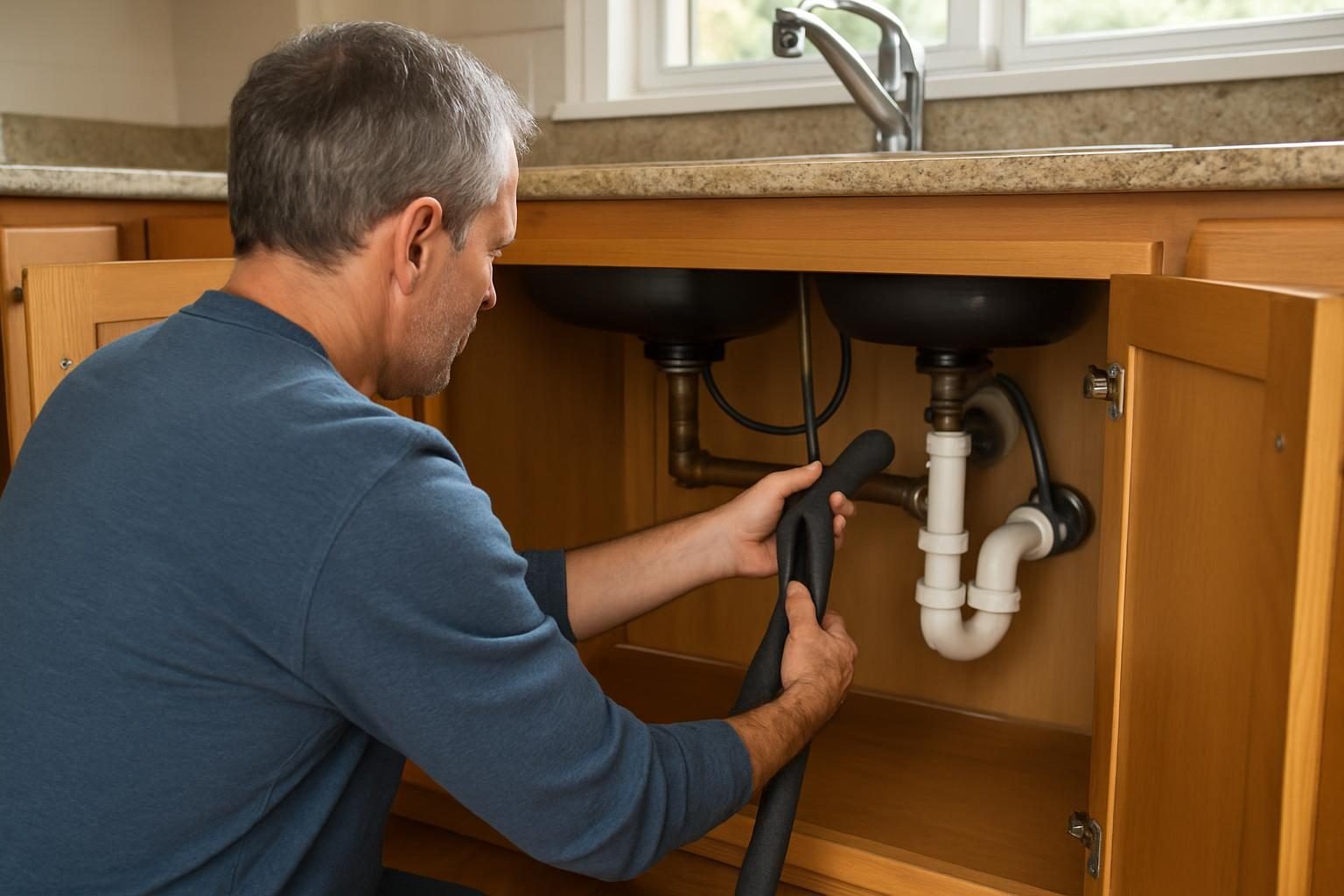
- Insulate exposed pipes. Foam pipe sleeves are inexpensive at any hardware store and fit most standard pipe sizes. Focus on pipes in garages, crawl spaces, basements near exterior walls and under sinks on outside walls.
- Seal air leaks. Caulk or foam gaps where pipes enter the house, and seal around rim joists and dryer vents. A drafty old house often has the same gaps that let cold reach plumbing.
- Disconnect hoses and winterize outdoor spigots. Drain the line and shut off the interior valve if your home has one for the exterior faucet.
- Insulate where you can. Better insulation in attics, walls and rim joists helps both pipes and comfort. See our planned guide on attic and wall insulation for Buffalo homes.
- Get your heat system checked. A furnace that quits during a cold snap is a leading cause of frozen plumbing. A furnace tune-up before the first freeze is worth doing.
Local tip: Find your main water shutoff valve now, in October, not during an emergency. Check that it turns fully and label it with a tag. In many older Buffalo homes it is in the basement near where the water line enters, often close to the meter. Everyone in the household should know where it is.
During a hard cold snap
- Keep the thermostat at 55°F or higher, even when you are away.
- Open cabinet doors under kitchen and bathroom sinks on exterior walls so warm room air reaches the pipes.
- Let a faucet drip slowly (a thin stream is plenty) on lines most likely to freeze. Moving water is harder to freeze, and a drip relieves pressure if ice forms.
- Keep the garage door closed, and if you have pipes in the garage, consider a safe, approved heat source only if you follow the manufacturer’s instructions.
- If you travel, ask someone to check the house, or consider having a plumber drain the system for a long absence.
A foam sleeve and a closed cabinet door cost almost nothing next to a burst pipe.
How to Thaw Frozen Pipes Safely
The first sign is usually a faucet that runs very slowly or not at all, especially when other taps work. You may also see frost on exposed pipes or hear odd sounds. If you suspect a freeze, act quickly but carefully, because a frozen pipe can crack and then leak when it thaws.
Step by step
- Open the affected faucet (hot and cold) so water and steam can escape as the ice melts.
- Find the frozen section. It is often along an exterior wall or near a cold spot. Look for frost or a pipe that is very cold to the touch.
- Apply gentle heat. A hair dryer on low, a heating pad wrapped around the pipe or warm towels all work. Start nearest the faucet and work back toward the frozen area.
- Keep going until full flow returns, then check the pipe and joints for leaks.
- Keep the faucet dripping for a while and warm the space to prevent a refreeze.
What not to do
- Never use an open flame, propane torch or kerosene heater. This is a fire risk and can damage pipes and soldered joints.
- Do not use a high-heat tool that could scorch wood or overheat a plastic pipe.
- Do not leave any heating device unattended.
- Do not try to thaw a pipe you can already see is cracked or leaking. Shut off the water first.
If you cannot find the frozen section, it is behind a wall or ceiling, or the pipe will not thaw, stop and call a plumber rather than risk damage.
What to Do If a Pipe Bursts
A burst pipe can release a huge amount of water quickly, and the worst damage often shows up as the ice melts. Stay calm and move in this order.
- Shut off the main water valve right away. This stops the flow to the whole house.
- Turn off electricity to affected areas if water is near outlets, appliances or the panel, and only if you can do so safely without standing in water. If in doubt, stay out and call an electrician or your utility.
- Open faucets to drain remaining water from the lines.
- Contain the water. Move belongings, soak up standing water and use buckets or towels where you can.
- Take photos and video of the damage before cleanup, for your records and insurance.
- Call a plumber to repair the pipe, and call your homeowner’s insurance company to ask about coverage and what they need from you.
Keep wet materials from lingering. Water-soaked drywall, insulation and carpet can grow mold, which is a real concern in many Buffalo basements. See our planned guide on basement mold in Buffalo homes for more.
Local tip: If water is flowing and you cannot find or turn off the main valve, your municipal water authority can help shut off service at the street. Check your local water provider’s website for the emergency contact, and save it in your phone before winter.
Shut off the water first, take photos second, and make the phone calls third.
When to Call a Plumber
Some freezes you can handle yourself. Others need a pro. Call a plumber if:
- A pipe has burst, cracked or is actively leaking.
- The frozen section is inside a wall, ceiling or floor and you cannot reach it.
- You have thawed one pipe but others keep freezing, which points to an insulation or heating problem.
- You have no water at all and cannot find the cause.
- You want a pro to reroute or insulate a recurring problem line, especially in a garage or exterior wall.
Ask for a licensed, insured plumber, ask about emergency availability and get an estimate before non-urgent work begins. For a sense of typical pricing, see our planned guide on what a plumber costs in Buffalo. Costs vary widely depending on the problem, access and time of day.
If your freeze came from a heating failure, you may also be dealing with the furnace. Our planned guide on furnace replacement cost in Buffalo covers that side. For general cold-weather planning, our Buffalo winter survival guide is a good companion read, and if you are also dealing with roof edge problems, read about ice dams in Buffalo.
Need a hand? Request a quote from a vetted local plumber using the form on this page.
Frequently Asked Questions
At what temperature do pipes freeze?
Water freezes at 32°F, but pipes inside a heated home usually stay safe until outdoor temperatures drop well into the teens or lower, especially for several hours. Pipes in unheated spaces, garages and exterior walls can freeze sooner. Prolonged cold and wind raise the risk.
Will a dripping faucet really prevent frozen pipes?
It helps. Moving water is harder to freeze, and a drip relieves pressure between the ice and the faucet, which lowers the chance of a burst. It is not a substitute for insulation and heat, but it is a smart extra step during extreme cold.
How long does it take for a pipe to freeze?
It depends on insulation, wind and how cold it gets. In a poorly protected space during severe cold, pipes can freeze within hours. In better-insulated spaces it may take much longer. The key is not to wait and see.
Does homeowner’s insurance cover burst pipes?
Many policies cover sudden water damage from a burst pipe, but coverage varies, and some policies have exclusions or require that you kept the home heated. Check your own policy and talk to your insurer or agent about what applies.
Can I leave the heat low if I am away in winter?
Keep it at 55°F or higher. Turning it way down to save money can lead to a freeze. For long absences, consider having someone check the house, or ask a plumber about draining the system.
Get help from a vetted Buffalo plumber for frozen pipes
A vetted local plumber will reach out with a free, no-obligation quote.

